
How your shade fits — no drilling, no fixings
Here’s how it works. The thin linen shade hangs down the outside of the window and is held in place by the window itself — nothing is drilled, screwed or stuck on. Here’s a side-on view of a shade fitted to a standard sash window, closed shut.
Hangs on the outside
The thin shade hangs flat down the outside of the glass, stopping the sun’s heat before it can reach the window and warm the room.
Threads through the gap
At the top and bottom, the sash is opened slightly so the fabric can be passed through the gap, then closed again to squeeze it snug against the frame.
A dowel holds it fast
A slim wooden dowel, sewn into a pocket at each end, sits on the inside. It’s wider than the gap, so the closed window holds the shade — no fixings, and it lifts out just as easily.
How to fit it
- With the top sash open a little, pass the shade out through the gap, then push the sash back up to squeeze the fabric snug against the frame — with the dowel resting on the inside.
- With the bottom sash open a little, reach out and pull the shade through to the inside, then close the sash again to squeeze the fabric against the frame — again with the dowel on the inside.
- Once fitted, you can still lock the window shut — handy if you’re heading out or want extra peace of mind.
How to use your shades
Your shades stop the sun's heat before it reaches the glass. The best position depends on how warm it is outside and where the sun is — here are the three positions to move between through a hot day.
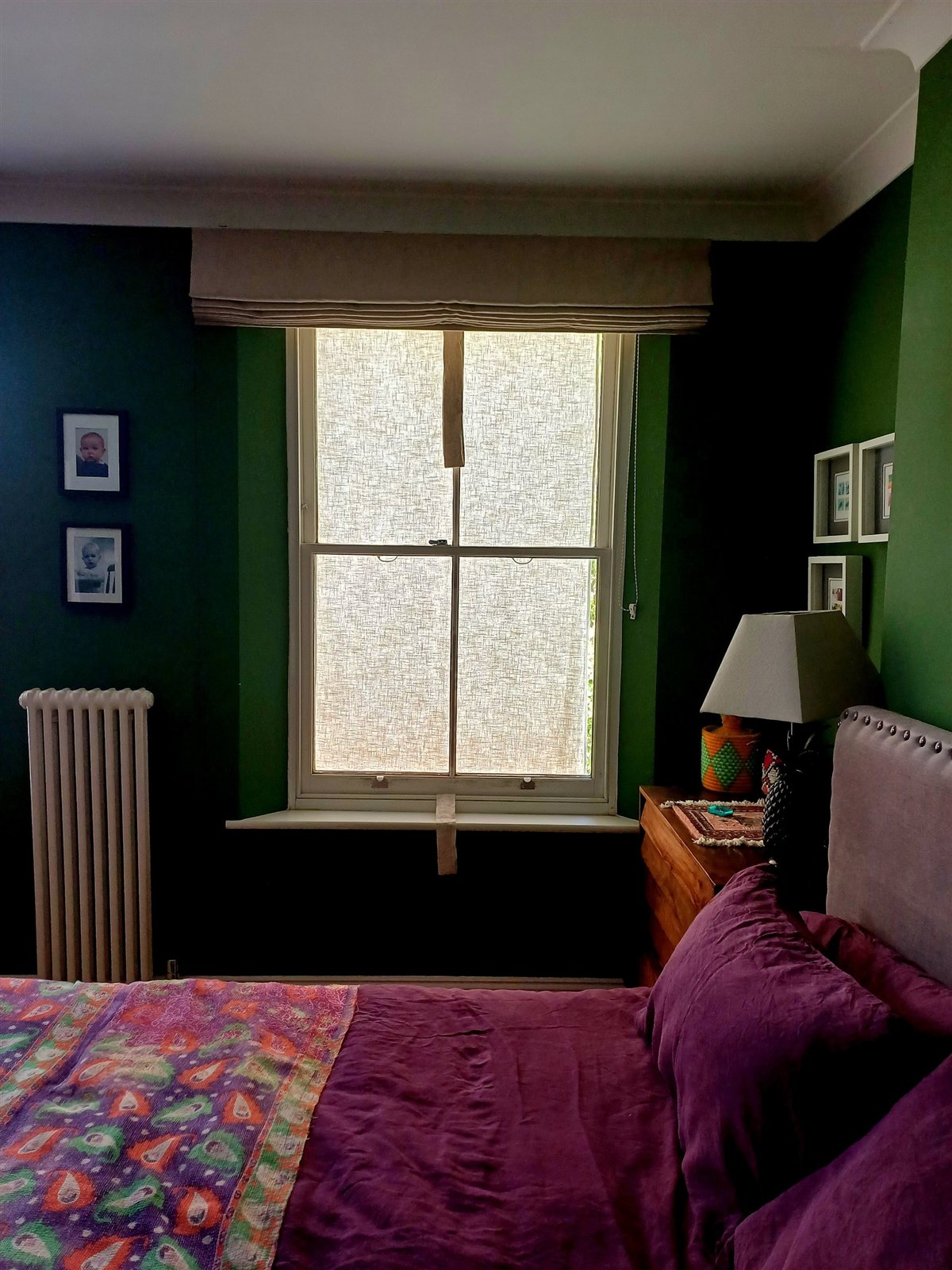
Closed and fully shaded
The window is shut and the shade covers the whole window, taking the sun's heat before it can reach the glass and warm the room. It's the most secure position too, so it's the one to leave when the house is empty.
When to use: most of the day during a sunny heatwave — set it before the sun reaches the window, especially if you're heading out.
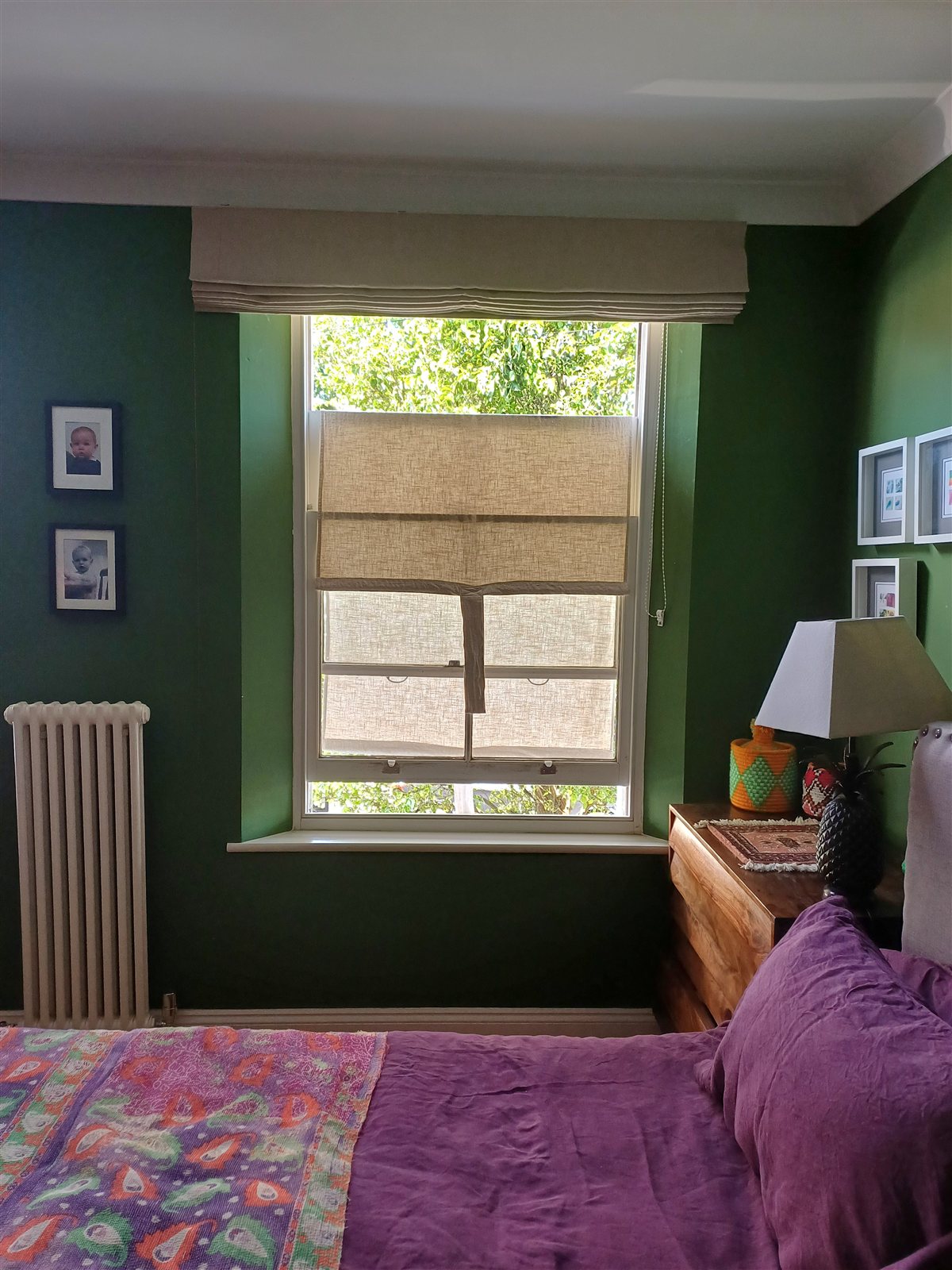
Vented for airflow
Open a sash a little and the glass stays shaded while cooler outside air flows in. Crack just the bottom for a gentle draught, or open both the top and bottom (as shown) for maximum airflow — you'll block a touch less sun, but still cut the sun's radiation by more than half.
When to use: when it's cooler outside than in but the sun is still on the window — early sun on east-facing windows, or warm evenings on west-facing ones.